Custom Domain Software Engineering
What is Custom Domain Software Engineering?
Custom domain software engineering is the design and implementation of systems tailored to complex, domain-specific requirements that cannot be solved by generic platforms or off-the-shelf tools. It involves translating regulatory frameworks, operational constraints, scientific models, or infrastructure intent into structured, maintainable software architectures. These systems demand deep alignment between technical implementation and domain logic, with a focus on correctness, extensibility, and long-term operability.
Translating Domain Complexity into Engineered Systems
Across regulated finance, public-sector mobility research, and cloud infrastructure environments, we have built software systems where business rules, regulatory constraints, or operational intent define the architecture itself. Our role is to collaborate closely with domain experts, formalize complex rules into deterministic logic, and design architectures that remain adaptable as requirements evolve. Whether encoding tax regulations, model-driven routing behavior, or infrastructure abstractions into programmable systems, we focus on long-term maintainability, clarity of domain boundaries, and technical precision over short-term convenience.
Domain-Driven Architecture Stack
A combination of typed backends, explicit domain boundaries, and rule-driven processing layers that ensures clarity, correctness, and long-term adaptability.
Strongly Typed Backend Systems
We use statically typed languages and structured service layers to model domain rules explicitly. Clear type systems reduce ambiguity and enforce correctness in complex regulatory or operational logic.
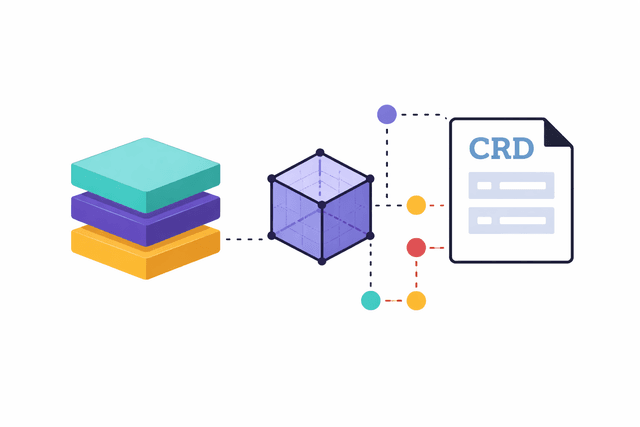
Domain Modeling & Abstraction Layers
We formalize business rules into explicit abstractions—whether through platform libraries, domain-specific services, or Kubernetes custom resources—ensuring that infrastructure and application logic align with real-world intent.
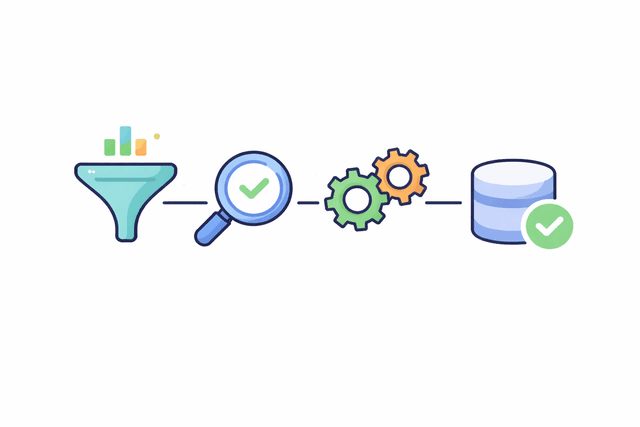
Deterministic Processing Pipelines
Complex domain flows—tax calculations, routing models, infrastructure scheduling—are implemented as predictable, auditable pipelines rather than ad-hoc scripts or spreadsheet logic.
Precision Built into Architecture
We design systems where domain rules are explicit, boundaries are clear, and long-term maintainability is prioritized over short-term convenience.
Architectural Precision
Domain rules are modeled explicitly rather than scattered across code and configuration. This reduces ambiguity and ensures correctness in complex environments.
Clear Domain Boundaries
Well-defined service and domain boundaries prevent hidden coupling and allow systems to evolve without unintended side effects.
Long-Term Adaptability
Regulatory frameworks, research models, and operational constraints evolve. We design architectures that can incorporate change without structural rewrites.
Reduced Hidden Complexity
By replacing ad-hoc scripts, spreadsheets, and implicit workflows with structured systems, we eliminate fragile dependencies and surface logic clearly.
Sustainable Maintainability
Our focus on explicit modeling, typed backends, and controlled abstractions ensures systems remain understandable and operable years after initial delivery.
Deep Domain Collaboration
We work closely with subject-matter experts—whether in tax law, infrastructure operations, or scientific research—to translate implicit knowledge into explicit system behavior. This ensures that the architecture reflects real-world intent rather than assumptions or superficial interpretations.
Off-the-Shelf Software Not Fitting Your Domain?
Let’s translate your domain complexity into a clean architecture with explicit rules, clear boundaries, and long-term adaptability.
Book a CallPick a time that works for you
Other areas we are passionate about
Internal Developer Platforms
We design and implement internal platforms that standardize service provisioning, deployment, security, and compliance. From high-level service abstractions to embedded governance-by-design, we reduce onboarding from weeks to days and enable teams to ship safely at scale.
ExploreCloud-Native Infrastructure & Kubernetes
We build and operate scalable AWS and Kubernetes environments with GitOps, Infrastructure-as-Code, and automated security patterns. From multi-account governance to production-grade EKS clusters, we ensure reliability, compliance, and long-term operability.
ExploreCloud Transformation & Migration
We modernize legacy systems into resilient, cloud-native architectures. Whether decomposing monoliths into microservices or migrating from public cloud to sovereign on-prem environments, we deliver controlled, value-driven transformation.
ExploreTax & Regulatory Software Engineering
We build domain-heavy financial and tax systems that encode regulatory complexity into software. From private equity fund taxation to automated submissions to authorities, we deliver compliance-by-design platforms with auditability and role-based governance.
ExploreProcess & Workflow Automation
We translate complex business processes into robust software systems. From approval workflows to multi-entity reporting orchestration, we replace fragmented manual processes with scalable, structured automation.
Explore